
In the cosmetics industry, packaging is often the first point of contact between a brand and its customer. A well-designed folding box for cosmetic packaging not only protects the product but also communicates quality, safety, and brand positioning. Choosing the right manufacturer is therefore a strategic decision—not just a sourcing task.
This guide explains how cosmetic brands and importers can select a reliable folding box manufacturer that meets quality, compliance, branding, and scalability needs.
Why Folding Boxes Are Widely Used in Cosmetic Packaging
Folding boxes are one of the most common packaging solutions for cosmetics, skincare, and beauty products because they offer:
Cost efficiency for medium to high volumes
Excellent print quality for branding
Flexible structures for different product sizes
Easy storage and shipping in flat-packed form
From perfume boxes to skincare cartons, folding boxes balance visual appeal and logistical practicality.
Step 1: Evaluate the Manufacturer’s Experience in Cosmetic Packaging
Not all folding box factories understand cosmetic packaging requirements.
A qualified cosmetic packaging manufacturer should have experience with:
Skincare, makeup, fragrance, or personal care boxes
Packaging for fragile or premium cosmetic products
Brand-oriented printing and finishing processes
Ask for previous cosmetic packaging samples rather than generic paper boxes. Real experience reduces trial-and-error costs.
Step 2: Check Material Quality and Paper Options
Cosmetic folding boxes rely heavily on material selection.
Common materials include:
SBS paperboard (white, premium appearance)
Art paper laminated on grayboard
Kraft paper for natural or eco-focused brands
A professional manufacturer should explain paper thickness (gsm), stiffness, and surface compatibility with printing and finishing.
Poor material choice can lead to box deformation, color inconsistency, or reduced shelf appeal.
Step 3: Assess Printing and Finishing Capabilities
Cosmetic packaging is highly design-driven.
Look for manufacturers offering:
Offset printing for high-resolution graphics
Accurate color matching (Pantone support)
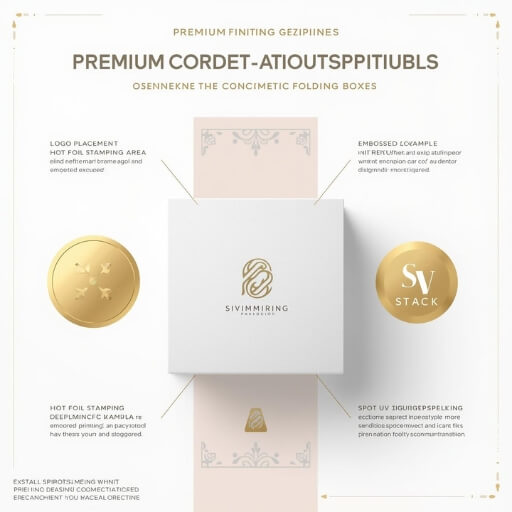
Premium finishes such as hot foil stamping, embossing, debossing, spot UV
Ask whether these processes are in-house or outsourced, as this affects lead time and quality control.
Step 4: Confirm Compliance and Safety Standards
Cosmetic packaging must meet regulatory and brand safety expectations.
A reliable folding box manufacturer should be familiar with:
Packaging safety standards for cosmetics
FSC-certified paper sourcing
Low-odor and non-toxic inks
Authoritative organizations like FSC (Forest Stewardship Council) and ISO provide globally recognized guidelines for responsible packaging production.
Step 5: Review Structural Design and Customization Support
Folding boxes are not one-size-fits-all.
A capable manufacturer should provide:
Structural design recommendations
Die-line development
Sample prototyping before mass production
This is especially important for cosmetic products with unique bottle shapes or inner trays.
Manufacturers that offer engineering input, not just printing, add long-term value.
Step 6: Understand MOQ, Lead Time, and Scalability
Minimum order quantity (MOQ) matters, especially for emerging cosmetic brands.
Ask clear questions about:
Standard MOQ for cosmetic folding boxes
Sample lead time vs bulk production lead time
Capacity to scale as your brand grows
Many gift box factories and custom packaging manufacturers in China offer flexible MOQs while maintaining consistent quality.
Step 7: Inspect Quality Control and Consistency
Consistency is critical for cosmetic branding.
A professional manufacturer should have:
Incoming material inspection
In-process quality checks
Final inspection before shipment
Request information on QC procedures, not just certificates.
Step 8: Evaluate Communication and Long-Term Reliability
Packaging is rarely a one-time order.
Choose a folding box manufacturer who offers:
Clear communication in English
Transparent quotation breakdowns
Stable production schedules
Reliable communication prevents delays during product launches or seasonal campaigns.
Common Mistakes When Choosing a Folding Box Manufacturer
Choosing based on price alone
Ignoring cosmetic-specific experience
Skipping sample testing
Overlooking sustainability expectations
Packaging failures often cost more than the initial savings.
FAQ: Folding Box Manufacturer for Cosmetic Packaging
Q1: What paper is best for cosmetic folding boxes?
SBS paperboard is widely used for premium cosmetics due to its smooth surface and print quality.
Q2: Are folding boxes suitable for luxury cosmetic brands?
Yes. With high-quality printing and finishes, folding boxes can look refined and upscale.
Q3: How long does cosmetic folding box production take?
Typically 15–25 days depending on complexity and order volume.
Q4: Can folding boxes be eco-friendly?
Yes. FSC-certified paper and recyclable mono-material structures support sustainability goals.
Final Thoughts
Choosing the right folding box manufacturer for cosmetic packaging is about balancing aesthetics, compliance, production reliability, and long-term partnership. Brands that invest time in evaluating manufacturers gain packaging that supports growth, consistency, and brand trust.
 Cosmetic Boxes
 Chocolate Gift Boxes
 Corrugated Mailer Boxes
 Folding Gift Box